‘Wer,
wenn ich schriee, höre mich
denn aus der Engel/ Ordnungen?’
(‘So who then, even if I shrieked,
would hear me among the angel orders?’)
(R.M Rilke,
Duineser Elegien, 1)
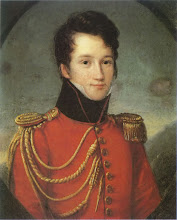
‘That which speaks to me about the
humane…. are the figures of those who died young and the loving…. Through both these figures the humaneness is
blended into my heart, whether I want it or not.’
(R.M. Rilke, Letter to A. Kolb).
‘Ha
gente na fica na historia/Da historia a gente’ ‘There are
people who remain a part of us/ Becoming part of our own story.’ (Jorge Fernando, Chuva: Fado).
When the World War to end all wars was over 1
And planning for our next war under way,
With other wars, not ours yet, burgeoning
In distant countries bearing half-known names,
Wars laying ambush for us, steel unsprung,
Weary of war and sick of war’s alarms
I sought out solace in less lethal arms.
At eighteen, Eve was also fresh from school,
A Ladies’ College siren, slim and blonde,
High-breasted, swan-necked, rose-lipped, azure-eyed,
Her smile bright as a blade. Though
intertwined
Shrouded in darkness in a dream-palace,
(Sole sanctuary for lovers in their teens
When Church and State conspired to keep us pure),
Our thwarted passion left our thirst unslaked
Without the solace of that Grecian Urn[i]
For we were fated both to fade and
grieve.
That wintry week, a thoughtful War Office
Had sent a Christmas gift, my call-up card,
(Too young to vote, just old enough to kill).
Long years of separation loomed ahead.
Such severance leaves love bleeding, if not dead.
When king and country call, your
number’s up.
The hemlock’s brewed! Drink boldly from the cup!
To tell but the truth,
We lived among losers,
Puritan provincials,
In a land that was lamed ,
Damaged by Depression,
Shabby and scarred,
Tired and tawdry,
Worn out by wars,
Battered by bombing.
Forty years of folly
Had dragged us down
To a ramshackle ruin
Ineptly administered
By arrogant asses,
Braying buffoons,
Oxbridge oafs;
Traitors at the top,
Whores in high places, 40
(Harlots like Hollis,[ii]
On misshapen monuments
We mourned mass murders,
Flesh of the fallen
Fettered to stone,
Incised in iron,
Name after name,
Squandered and scattered.
Broken the banners
Of ruined regiments
Blazoned battalions,
Decimated divisions.
Were we too destined
To die with devotion,
Unquestioning idiots,
Massacred morons,
Asinine armies
All annihilated?
Schlachtfeld! Battlefield!
Mordesmorde Murder on murder
Blinzeln Blink
Kinderblicke[iv] Children’s sight
For I was set to go and ‘play the game,’ 60
Stiff lipped and nonchalant, the ‘old school’ style,
Befitting scions of a Brigadier,[v]
(Courageous veteran of two world wars,
Still walking stiffly from the wounds he bore),
In hopeless rematch with an ageless ogre
That had devoured grandfathers and fathers,
Killed half our kin, slaughtered wailing children,
Defiled our mourning mothers, weeping wives,
And now was gearing up to do to us
What Minotaur had done to Greek ephebes,
Its expertise perfected by long practice,
Ingeniously improved technology,
Strange artifices meant to expedite
The mathematics of Apocalypse,
Mutual assured destruction by consent
Till, surfeited, earth could not hide the slain.
Times were brutal then, our winter icy,
And hearts grown hardened as the frozen soil;
Since love was rationed tighter than our food
And sex become an obscene, sniggering word, 80
We hungered vainly, dreaming of a life
Less circumscribed by harsh necessity
Than this one where the State’s Medusa glare
Might turn us all to headstones, row on row.
‘Dulce et decorum est pro patria mori’.[vi]
(Horace, Poet Sycophant to
emperors,
Stern advocate of soldiers’
funerals
Along with Virgil, sonorous as geese).
I filed my call-up with my Latin verse,
Then crept back to my place in Plato’s Cave.
Since ‘Carpe diem!’ was my
watchword then,[vii]
Intent on death, I plucked my roses fast.
For ‘true to one another’ did not mean we’d last.[viii]
‘With luck,’ I’d tell her, ‘We’ve five years to go;
Russian roulette’s a short and lethal game.
When Stalin sows our killing fields we’ll see
Red dragon’s teeth spring up as fighting men[ix],
And then our ignorant armies, East and West,
Locked in blind struggle by this darkling Rhine,[x]
Will join those vanished legions Varus led 100
Through German forests where black trees eat men,
Grim Felsenfeld, where blood drizzled like rain.[xi]
That Christmas Eve a snow storm swooped on us,
Sweeping across our blackened, flint-flaked sea,
Holding us captive in a Coliseum,
Marooned upon a gloomy balcony
In a cavernous, echoing theatre.
Stern Monitors of Law, Furies with torches,
The usherettes retreated to their lair,
Undid their uniforms, let down their hair.
Revelling in this concupiscent carnival,
Glad of this solstitial Saturnalia,
They sprawled sloshed on gin, sedately sodden with scotch,
Under their happily drunken, demobbed boy-friends;
Listened to Vera warbling on white cliffs of Dover,[xii]
Listened to Bing groaning south of the Border,
Swooned at Sinatra crooning to mademoiselle,
Left us alone in a cinema now all ours,
Musical syrup oozing down into their ears.
Then, just as ads were fading from the screen, 120
And darkness drowned our auditorium,
With unseen angels caroling of peace
To shivering sheep and shepherds all unwashed,
Capricious Eve lavished largesse on me,
A gracious gift richer than Orient pearls,
Dazzling as diamond, rarer than radium,
As unexpected as munificent.
As Merteuil shrewdly said of some young girls,
‘Quand elle dit “Je vous aime,” elle se
rend’.’[xiii]
(‘For them to say “I love you” is to yield.’)
Disrobing there with daring nonchalance,
She made the balcony our bedchamber,
Removing, with most admirable aplomb,
The Fourteen Obstacles to Fulfillment,
With tantalizing slowness, ordered so:
Her handbag, Paisley headscarf, gloves, fur
coat;
White cashmere jumper, silken Dior blouse;
Her camisole and singlet, then her bra;
Her crimson New Look skirt, Parisian
style;[xiv]
Flounced petticoat,: scarlet stiletto
heels; 140
Sheer nylon stockings, panties (lacy,
white),
Draping some carefully over seats like washing,
Folding others neatly, heaped in fragrant arrays,
Leaving her belly girdled with silken suspense,
Her gold watch encircling her fine-boned, slender wrist,
An amethyst necklace adorning her cleavage,
Goya’s La Maja, an odalisque
by Ingrès,
A sensual Titian Venus,
Tintoretto nude,
Ovid’s Corinna, quam iuvenale
femur![xv]
Whiter than snow sieved by this boreal blizzard,
Couched on fur, supine and naked as her namesake
Under white apple blossom, in a bower of bliss.
For three hours, floored, we made undying love,
Inspired by Vatsyayana’s, fleshly sutra,[xvi]
While Ovid and Catullus spurred us on[xvii]
Through colour cartoon, B-movie and main feature,
Entwined on damp fur in that flickering dark,
Under blue, lancing meteorites of light,
The family Bentley’s rug to keep us warm. 160
And school room Latin running through my head:
‘Singula quid referam? Nil non laudabile
uidi
Et nudam pressi corpus ad usque meum’[xviii]
Like Ice-age hunters, huddling in a cave
Above a glacis swept by glaciate winds
While the Aurora
seared the northern sky,
Urged on by snow queens thronging empty seats
And booming frost giants stalking through the stalls,
We climaxed with theatrical success.
When finally the lights came on again,
As we dressed hurriedly to Save
the King!
(Atop his thoroughbred he seemed to say
‘Why does my wife find me a bore
in bed?),
I turned to her and asked what we’d not watched
(For watch one should on holy
Christmas Eve)
‘It’s a wonderful life,’ she
told me softly, [xix]
As Mary might have murmured at the inn,
Watching her baby suckle at her breast,
The Prince of Peace who came with sword in hand
And, conquered, brought the victors to their knees.
Though I agreed, of course, wholeheartedly, 180
I wondered why my query went unheard,
Believing Eve’s Three Faces
had been shown[xx]
Not guessing I’d missed Capra’s festive play.
Then hand in hand we braved the falling snow
Enshrouding all my Welsh hills and the Dee,
(Anghofia oll yr addewidion[xxi]
Awnest i rywun, eneth ddell.)
Cloaking the estuary in Druid white,
Shrouding the road once Castra’s legion trod,[xxii]
Valeria Victrix, squandered in Rome’s wars,
The wilderness where Gawain found his knight,
The ’gome in grene’ whose lady sought his head.[xxiii].
Veiling her treachery in courtly jest.
So Keats’ young lovers fled into the storm,[xxiv]
Hearts warmed by pointless pledges, hopeless hopes,
That wilder storms to come would sweep away.
Bleak winter breaks all promises of May.
The windows blank, gate creaking in the
wind,
Black gables overgrown with creeping
moss,
Her house stood still and empty; she was
gone,
Imprisoned in an urn’s cold pastoral.
A colder history within my heart.
Could never tell why it was desolate.[xxv]
Five decades passed, ephemeral as dreams, 200
And youth gave way to age, resignedly.
I watched a smaller screen one Christmas Night
- Crickets in chorus, susurrus of surf -
An envoy from the past, a Yuletide special,
An anguished actor realising the truth,
Thanks to a wandering angel’s guidance,
The world was far the better for his presence,
Though he believed that he had lived in vain.
Let not despair then tempt you to some brink
Hoping the engulfing flood might bring relief,
Though this has been the gift reserved for some
Despairing souls, alone on Christmas Eve,
Seeking for solace in oblivion.
Was this the remedy the poet sought
Upon those cliffs that beetled over the sea
Hard by the castle of the Hohenlohe[xxvi]
And might have found, had not an angel heard,
Though he believed no angel could exist
And that the north wind mocked his puny voice
So even if he did scream none would hear him? 220
‘Wer, wenn ich schriee, höre
mich denn aus der Engel
Who’d hear indeed? Yet Rilke
was mistaken,
For avatars arrive, though unexpected,
Alighting gracefully from gondolas,
Balloons and yachts, cars, buses, limousines,
From helicopters, gliders, private jets,
In somber seasons, robed in elegance,
Seraphim fair as lilies
of the field,
In frocks by Valentino or Lauren,
Fashions from Gucci, Galliano, Ford,
Graceful as girls gyrating on catwalks,
Perfumed with Joy, Sex or Jolie Madame,
Bearing handbags by Balenciaga,
And other cultural accoutrements,
Sigils of London, L.A.
Paris, Rome,
Ambassadors from angel embassies,
Slimmer than Syrinx, reed that Pan pursued,[xxviii]
With velvet voices, intonations pure,
More musical than fluting Philomel[xxix], 240
Sweet songs to lure us from the burning house
Of samsāra[xxx],
children enticed with toys.
These guardian angels know death to the
bone
And hence grow heedless of the endless rabble
Of luckless boys, ever borne lifeless
home
In wooden dignity from futile battle,
Where ‘With your shield or on it,’ is
the word,[xxxi]
And, unlike love, it’s better die than
yield,
Since those who live on lies must die by
sword
And Death, not Eros, strides the slaughterfield
Strewn once again with those who fought or
fled.
Half-dead themselves, gaunt victors burn
their dead.
Since love and war can seldom be conjoined,
As Vulcan proved to lovers he entwined,
Star-crossed, in amorous conjunction’s net,[xxxii]
And absence sharks up all our hopeless hopes,
Buoyed up but briefly by propinquity.
And Eve was soon to junk me for a fool,
(I’d known only one of her seven
faces,
Which she changed daily, livening up her week)
Then early joined those rose-lipped girls in fields
Where roses fade, as they were born to do, 260
In Earth’s dark monarchy, hungry for flesh,
Insatiable as any Cretan maw,
Then promises seemed puerile, oaths all vain,
Betrayal was the order of the day
And treachery turned commonplace as lies.
So someone’s wife made plaything of a boy
Who quickly proved he only toyed with her,
By leaving her to play with newer toys,
While I was left to face motherless young
Reflecting on how kindly I’d been served[xxxiii]
With troubles, toil and bitter recompense.
Then false friends fled, who ‘some
tyme did me seek’,’[xxxiv]
And though an angel stooped to rescue me,
And from my shipwreck bore me safe to shore,
Reviving me with sweet mouth pressed on mine,
Yet still I watched our world lurch towards where
The Damoclean sword hung by a hair.[xxxv]
For World War III kept clawing at our door
A rabid vampire thirsting for fresh blood,
A demented drunk demanding liquor,
A murderous maniac, wild, enraged, 280
A suicide peddling his paranoia
Year after year, psychopathic Santa,
With a sinister sack of nukes, nerve gas,
Pestilence, death and free fall out for all.
So, when I looked around, it sometimes seemed
The world was now that foul and fetid sewer
Where St Teresa saw herself in hell,[xxxvi]
Crouched in a dank cell, amid scuttling claws,
Exiled from light for all eternity.
Those years, I blenched and almost broke at times,
Grown wild with too much thinking on such things,
Recalling Rilke grappling with the gale
That sought to hurl him to the rocks below,
Where the sea crouched, tense, awaiting his fall,
Though not a leaf stirred in the stilly air.
Yet something long forgotten woke in me
In answer to the Master’s masterpiece;
I saw that she had answered my question,
Although unwittingly, that serene seraph
Whose ministrations place her with the loving 300
Though she once ripped a life to shreds with lies,
As smiling girls tear silken wings off flies[xxxvii].
Why from half-buried ruins of the past
Has memory preserved that Christmas Eve,
A patinated bronze urn from a site
Long swallowed up by treacherous, sifting sands?
Why in the telling of this lovers’ tale
Have I suppressed so much that I recall,
Reluctant to expose to hardened eyes
Grown brutal from a surfeit of soft flesh
Our naïve ardours, pristine ecstasies,
Hot tears, confessions, kisses, shudderings,
Our passionate avowals, cries, demands,
Hopes, longings, promises? Let
them still rest
Where they belong, deep in the heirless vaults
Of memory, unplundered, unalloyed.
Imagination weaves a tapestry
Shapen from shadows, faded, worn,,
Dimly descried by flickering candlelight, 320
Distorted by the years. In this
frail web,
This neural maze of flashing synapses,
Of neurons, dendrites, axons, cunningly
Contrived by māyā, where can
truth be found?
These images, blurred slide-shows in my brain
Are they confabulations? Do we
live
Amid phantasmagorias? Can we
Ever see things, as old Von Ranke hoped,
’Wie es eigentlich gewesen’? [xxxviii]
History
Has cunning corridors. We go astray
And lose ourselves in futile fantasies,
Misapprehensions, dreams, delusions, lies.
And yet we have no other guide than this,
As Dante received Virgil as his guide
(Catullus would have been a subtler choice
And exiled Ovid better than
them both)[xxxix]
Who yet was but an insubstantial shade
Though he conducted him through Purgatory,
And led him from the deepest hell to heaven.
Imagination is our Virgil here, 340
A wraith who bids us see where most are blind,
Shaping reality, blazoning the night
With fiery zones then summoning the sun[xl]
To turn the sea to silver, sky to gold,
The clouds to conches trumpeting the winds
To send them voyaging. Shape-shifters
all!
Transcending time, we too obey that call.
This story must end as a threnody
For poets know that lovers disappear,
(Crying out: ‘Liebende, seid
ihrs dann noch?)[xli]
Leaving only ashes and faded petals
In the rose garden with leaf-clogged fountains,
Where no birds sing, cold breezes blow at nightfall,
And the maze echoes with lost children’s voices,
As the ruined house settles into silence
Among the yew trees shading tumbled graves,
Where crumbling names sink into mossy stone
And time takes back what it so briefly dealt.
Yet though the festering wound she dealt still aches,
Where later she but harmed, she once had healed,
Forging her gift of innocent freshness,
Bestowing a reluctant truth on me: 360
That ‘all shall be well and all shall be well,
All manner of thing shall be well,’ for us,[xlii]
Provided we can learn just to forgive
Our own sick selves as well as those whose blades
Struck home with malice, even as they smiled,
And, faithless, taught us faith can play us false.
As obsequy, I render her grave thanks,
Whose name lives on, etched in my memory,
And shall not be forgotten nor contemned,
Like those dead flowers on that weed-grown mound.
Let her receive this funeral offering
(‘Ce vase pleine de laict,
Ce panier plein de fleurs’)
Who once bore Ronsard’s roses on her cheeks.[xliii]
Blind Orpheus, still losing what he seeks!
These marionettes, dream haunter and
betrayed,
Play out their puppet roles with nightly
tears,
Till he awakes, rejected by the shade
Of one who has been ashes forty years, 380
To wonder why his old wound bleeds
again,.
As dawn creeps blindly up the shadowed
wall,
Renewing still that bitter, angry pain,
Forgetting all is Void, illusion. All!
Yet in spite of our tears, our sorrows, loud laments,
Grief born of greed, tears sprung from ignorance,
From lust and violence, hatred, envy, lies,
Malevolence, backbiting, cold betrayals,
Mass lunacies, psychoses run amok,
Slaughters, mutilations, casual cruelties,
Stone-age stupidities, dangerous delusions,
Follies to make that marble angel weep
Who still stands sentry where her ashes rest,
Wings folded, as she folded up her days,
It’s still ‘a wonderful life’; its goodness somehow
‘Blended into my heart,’ whether welcomed or not.
So we endure, stiff figures on a frieze,
Frozen in tortured postures of desire
That trap us ever on a Wheel of fire.
Etched on our inward eye, such memories 400
Insects in honeyed amber, hold us fast,
Reflected in the pearls of Brahma’s Net[xliv],
Infinite jewels, worlds upon worlds! And
yet
Shadows ourselves, shadowing that Void,
[i] Keats, Ode on a Grecian Urn, ’Bold lover
never, never canst thou kiss/Though winning near the goal. Yet do not grieve/
She cannot fade, though thou hast not thy bliss/Forever wilt thou love and she
be fair.’
[ii] Sir Roger Hollis, one-time Head of MI5, was a
KGB agent.
[iii] One of the ‘Cambridge
spies’, along with Burgess, McLean and
Blunt.
[iv] August Stramm (1874-1915), Schlachtfeld. Stramm, a brilliant poet, was killed in WWI.
[v] The Headmaster of this English public school
was a former brigadier, with a distinguished military record.
[vi] ‘It is sweet and seemly to die for one’s
country’. (Horace, Odes, III,.ii)
[vii] ‘Seize the day!’ (Horace, Odes, I.xi)
[viii] Matthew Arnold, Dover Beach. ‘O love, let us be true to
one another…’
[ix] Cadmus killed the dragon that guarded the
fountain of Dirce. When he sowed its
teeth, they sprang up as armed warriors.
[x] Arnold,
Ibid.
‘And we are here as on a darkling plain /Swept with confused alarms of
struggle and flight/ Where ignorant armies clash by night.’
[xi] In 9 CE, the XVIIth, XVIIIth and XIXth legions
were wiped out at Felsenfeld by the Germans under Arminius.
[xii] Vera Lynn, a popular singer during and after
WWII.
[xiii] Slightly adapted from Mme de Merteuil in
Choderlos de Laclos, Les Liaisons Dangereuses, letter XXXIII.
[xiv] Introduced by Dior shortly after WWII.
[xv] Ovid, Amores,
1.V. ’Such youthful thighs!’
[xviii] Ovid, Amores
I..V ‘Why catalogue her
uniqueness? I saw nothing not worthy of
praise and held her naked body close to
mine.’
[xix] Referring to Capra’s It’s a Wonderful Life (1946).
[xx] Nunally Johnson’s Academy Award winner, The Three Faces of Eve, featured Joanne
Woodward as a woman with three separate personalities who led three separate
lives.
[xxi] ‘Forget all the vows you made to someone,
sweet girl’. A line from the Welsh song Myfanwy
[xxii] The XXth legion, Valeria Victrix, was stationed at Chester,
on the Dee, for some three hundred years.
[xxiii] The medieval poem, Gawain and the Green Knight, places the Green Knight’s castle
close to ‘the wilderness of Wirral.’
[xxiv] See Keats’s The Eve of St Agnes, final stanza.
[xxv] Ode on
a Grecian Urn, ‘And not a soul to tell/Why thou art desolate shall e’er
return.’
[xxvi] Near Trieste,
where Rilke began the Duino Elegies.
[xxvii] See Rilke, Duino Elegies 1. (See
epigraph to this poem, above)
[xxviii] The nymph, Syrinx, pursued by Pan, was
changed into a reed, from which Pan made his pipes.
[xxix] In Greek myth, Philomela, raped by King Tereus, became a
nightingale.
[xxx] A Buddhist term meaning ‘the apparently real
universe.’
[xxxi] An admonition delivered to sons by their
mothers in ancient Sparta.
[xxxii] Mars and Venus making love were trapped by Vulcan in a net.
[xxxiii] Sir Thomas Wyatt, They flee from me… ‘And since that I so kindly am served/ I fain
would know what she hath deserved.’
[xxxv] The sword was
suspended over the chair occupied by Damocles at a banquet. A metaphor for impending disaster.
[xxxvii] King
Lear, ‘As flies to wanton boys are we to the gods/ They kill us for their
sport.’
[xxxix] Since Dante was so in love with Beatrice.
[xl] C.f.
Wallace Stevens, The Idea of Order
at Key West.
[xli] Duino
Elegies. ‘Lovers, are you still there?’
[xlii] A saying of the fourteenth century mystic,
Lady Julian of Norwich
[xliii] ‘This vase filled with milk / This basket
filled with flowers.’ (Pierre de
Ronsard, 1524-85, ‘Comme on voit sur la
branche au mois de Mai la rose’). An
elegy for a young girl. (Original
orthography).
[xliv] Composed of pearls each reflecting the
images of the others. A Buddhist
metaphor for the Multiverse.
[xlv] The Void, śunyatā,
a
Buddhist term for Ultimate Reality.
Monday, May 22 2006
COPYRIGHT (C) 2010 J D FRODSHAM